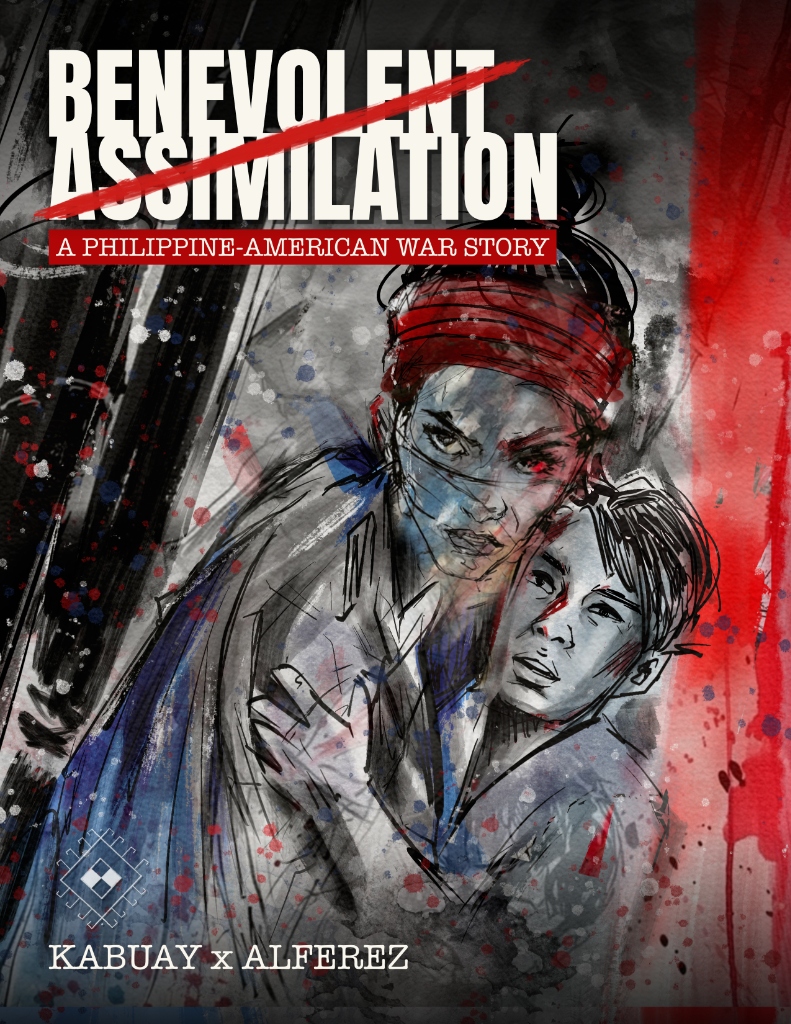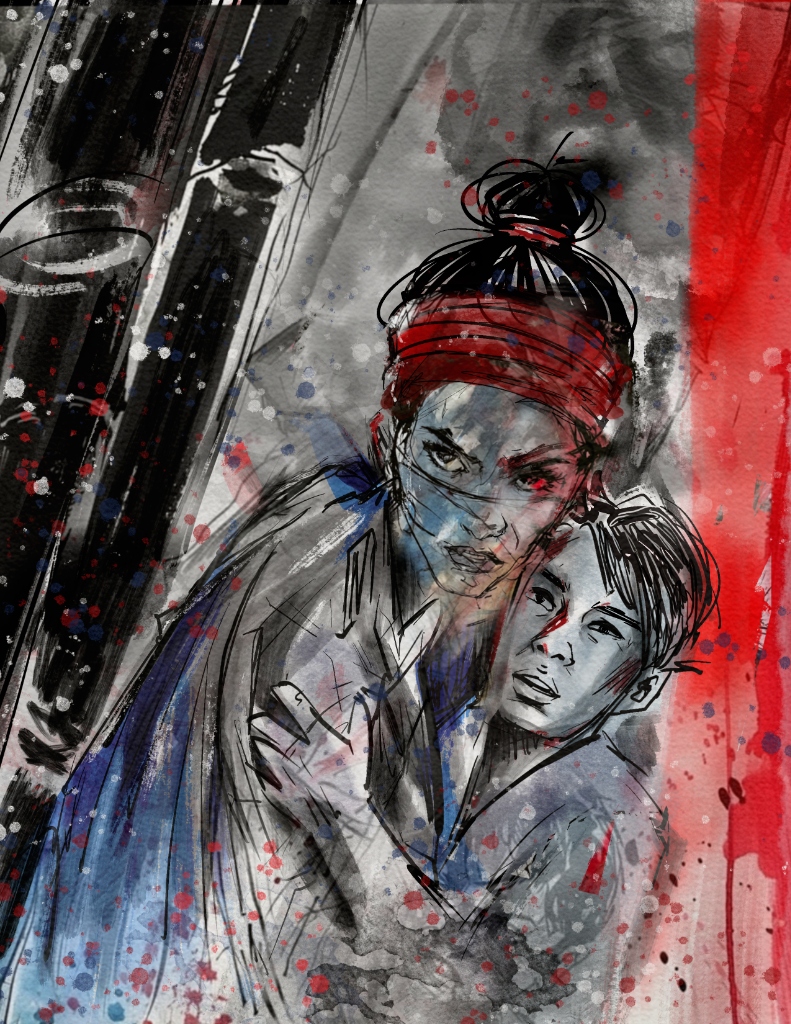
Maria protecting Mateo — ink and wash illustration

A Graphic Novel · Kabuay × Alferez

A Philippine-American War Story

Samar, Philippines. 1901. A tattooist in self-imposed exile. A boy hunted. A war America buried.

Format 110 Pages
Art Style Ink & Wash
Color Red · Blue · Grey
Status In Development

A survival story set against a forgotten war.

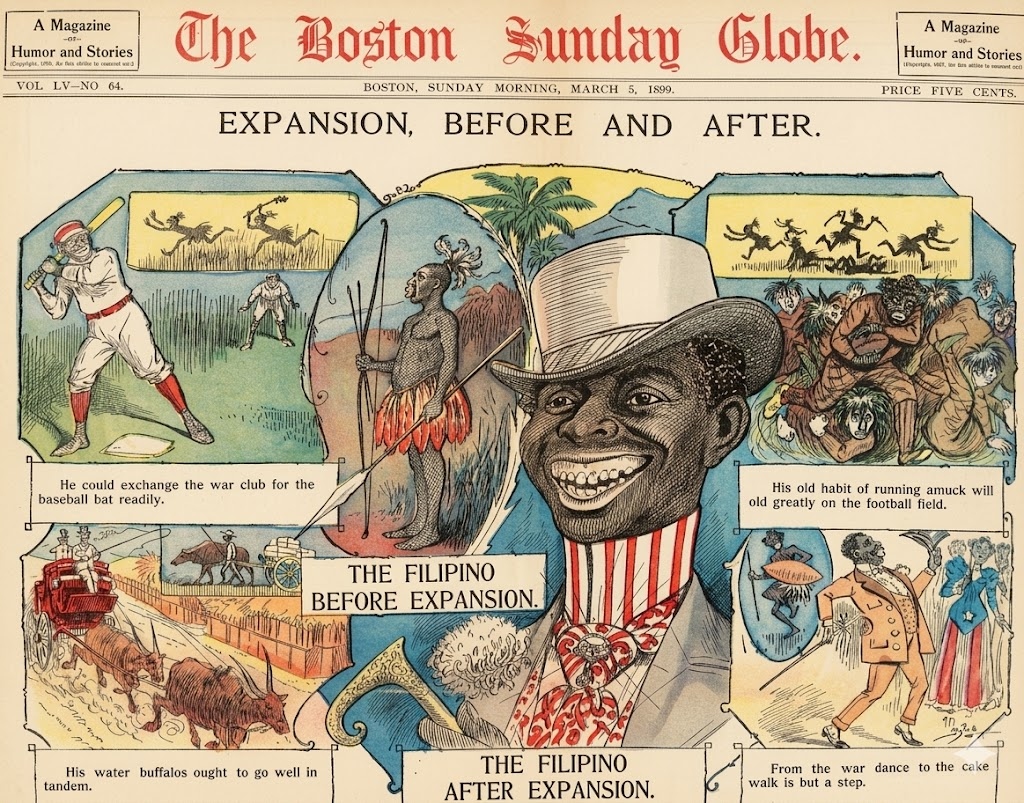
Following the 1898 Treaty of Paris, President William McKinley promised the Philippines a policy of benevolent assimilation, insisting the United States arrived as liberators. By 1901, the Philippine-American War had made the truth of that promise visible.

Deep in the mountainous interior of Samar, Maria lives alone. She was once a revered tattooist — her hands trusted to mark the bodies of her community with protection and identity. Three years ago a man named Miguel died from an infection caused by one of her tattoos. She has not practiced since. She carries her tools anyway, wrapped and unused. Among them, one she broke with her own hands: snapped deliberately, its fractured end sharp, carried because she could not throw it away.

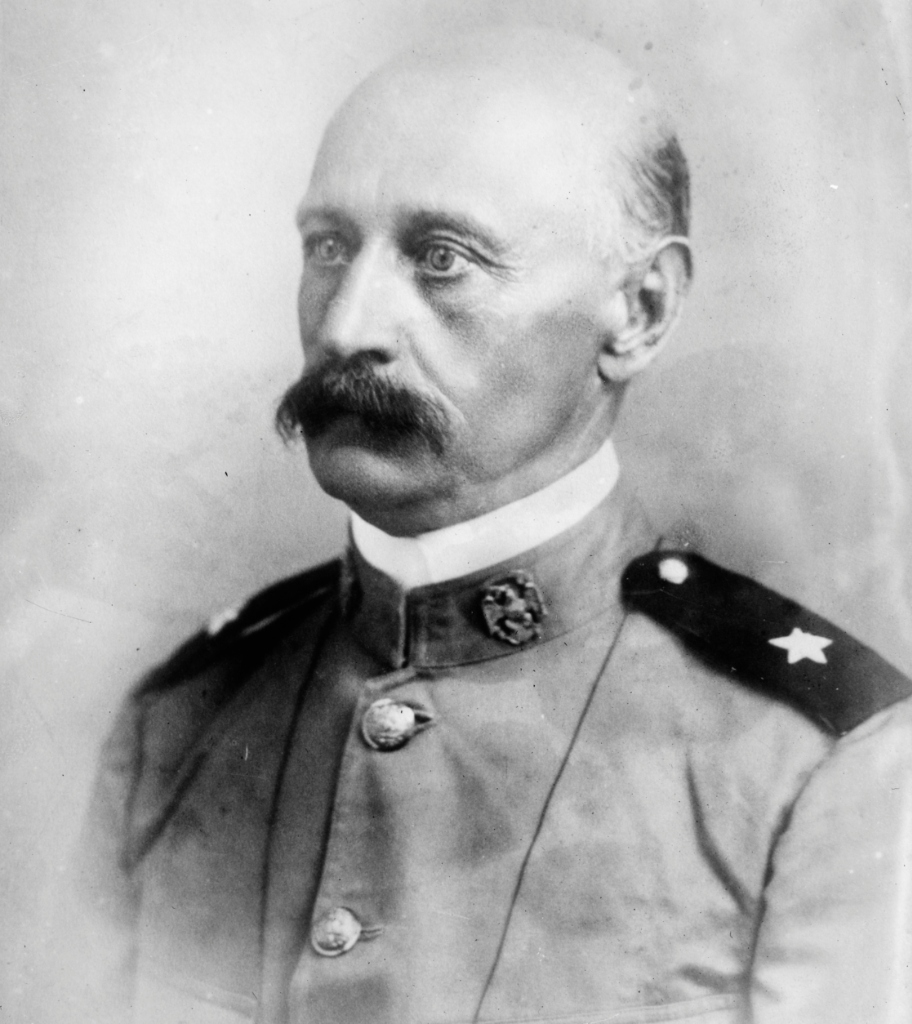
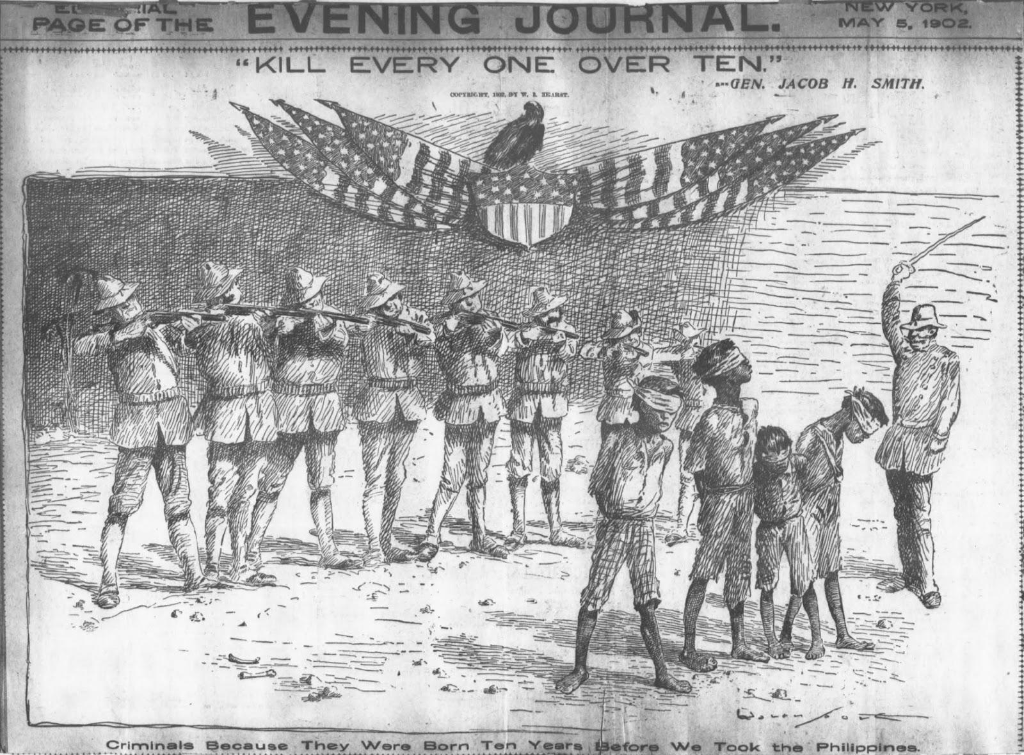
When General Jacob H. Smith orders his men to turn the island into a howling wilderness — kill everyone capable of bearing arms, age threshold ten — Maria finds Mateo fleeing the destruction of his village. He is eleven years old. He has been carrying her name, without a face to attach to it, for as long as he has been old enough to understand what it means.

"The deeper story is this: the boy is the son of the man the tattooist accidentally killed. He has known who she is since the moment he saw her tools. She will not know who he is until it is almost too late to matter."

Together they move through a landscape the American military is systematically destroying. A Filipino villager betrays their location for a quarter tossed without acknowledgment. A Black soldier in a blue uniform sees them in the undergrowth and lowers his rifle without a word.

When the truth surfaces — when Mateo speaks his father's name — Maria goes to her knees. Go ahead. She means it. What follows is the most desperate act in the story: a woman so certain she deserves consequence that she tries to use a grieving child's hand as the instrument of her own punishment.

He will not. She will complete it herself. On her own terms. With her own hands.

It ends with a mark left unfinished on the throat of the man who ordered the burning. It ends with a boy waking up alone in the morning light, wearing a blue shirt in a red-washed landscape.

Benevolent Assimilation — cover art
Red — The Occupation Fire, blood, the burning campaign. Every appearance of red is the occupation being present.
Blue — Maria Her field, her color, her practice. The shirt she gives Mateo. The unfinished mark on Smith's throat.
Black & Grey — Structure Ink and wash. The neutral field. The paper showing through. The ground always present.
Ancestor eye — Waray tattoo pattern

No names except the ones that matter.

Blue Field

Maria

Mid-forties. A Waray tattooist in self-imposed exile. Her hands carry twenty years of practice and three years of guilt. The most important line she speaks is three words: I'm the tattooist. Her silence does the rest.

Red Field

Mateo

Eleven years old. Tall for his age — old enough to mark him as a target under Smith's orders. He has been carrying his father's story, and Maria's name, since before he understood what either meant. He wears her shirt at the end.

Historical Figure

General Jacob H. Smith

"Hell Roaring Jake." He is not invented. He ordered his men to kill everyone capable of bearing arms, age threshold ten. He was court-martialed, found guilty, given a public reprimand, and permitted to retire with full military honors.

Red Field — Between

The Collaborator

No name. He exists in the grey field between the occupation and the community. He betrays their location for a quarter tossed without acknowledgment. He is the occupation's logic made local.

Blue Uniform / Red Field

The Buffalo Soldier

Identified by his uniform and a single gesture. He sees them in the undergrowth and lowers his rifle without a word. He is wearing blue — Maria's color — inside the occupation's red field. The story does not explain this.

Present Only in Memory

Miguel

Dead before page one. He came to Maria not for status but for healing. She read him, decided he was ready, and made the mark. The infection killed him. He is the story's first cause and its last consequence.

The ancestor eye pattern — two filled diamonds, traditional Waray tattooing

The ancestor eye pattern.
Two filled diamonds on the upper left deltoid.

It appears three times in the story: precise and complete on Miguel's arm, imprecisely copied by untrained hands on Mateo's deltoid, and unfinished on the throat of the man who ordered the burning. Three expressions of the same design. Three different conditions.

Ink and wash. Expressiveness in service of historical truth.

The visual style is locked. Black ink line work, grey wash for tone and shadow, with red and blue as the story's two structural color fields. The ink line work is expressive and gestural — loose, energetic, built from confident marks rather than tight rendering.

  • 01 High abstraction: the jungle sequences. The Samar interior as a living landscape — razor grass, unmapped trails, canopy that swallows light.
  • 02 Medium abstraction: Maria and Mateo. Faces readable and consistent across 110 pages. Expressiveness lives in line weight, not looseness of features.
  • 03 Lower abstraction: Smith. A documented historical figure whose face must be legible as a real person. The story is making a historical argument. His face is part of that argument.
  • 04 Most precise: the tattooing tools. The broken tool must be identifiable in every panel. The story's central visual object and primary through line.
Cover with Patik tattoo motif — ink and wash illustration
"We come not as invaders or conquerors, but as friends, to protect the natives in their homes, in their employments, and in their personal and religious rights."
— President William McKinley, Benevolent Assimilation Proclamation, December 21, 1898
200K–1M

Filipino civilians
killed in the war

10

Age threshold set
by General Smith

0

American schools
that teach this war

The Philippine-American War killed between 200,000 and 1,000,000 Filipino civilians. It is taught in almost no American school. General Jacob H. Smith was court-martialed, found guilty, given a public reprimand, and allowed to retire with full military honors.

This story does not explain history. It inhabits it.

Benevolent Assimilation — cover art by Kabuay × Alferez

A story that could only be told by someone who practices it.

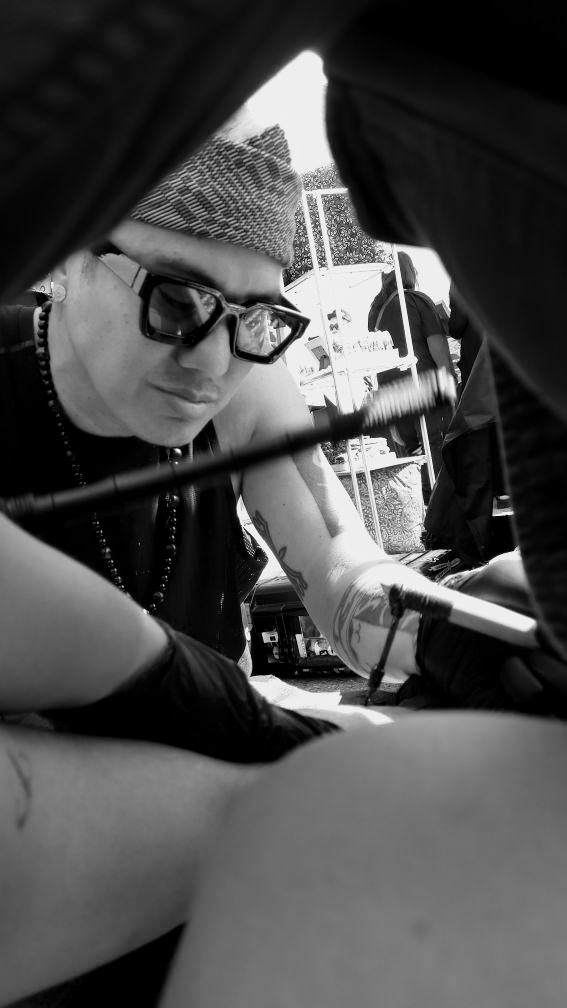
Kristian Kabuay is a Filipino-American multimedia artist, traditional hand-tap tattooing practitioner, cultural educator, and founder of Baybayin.com. He coined the term Pre-Filipino and has lectured at major institutions across the United States.

He holds an Alliance for California Traditional Arts fellowship and trained in traditional hand-tap tattooing under Lane Wilcken, the foundational figure of the contemporary revival in the diaspora. He is the creator of two previous graphic novel titles incorporating traditional tattooing as a central element and is the founder of Balay School, an AI-powered Filipino cultural education platform. He is based in the San Francisco Bay Area.

Alliance for California Traditional Arts fellow
Trained in traditional hand-tap tattooing under Lane Wilcken
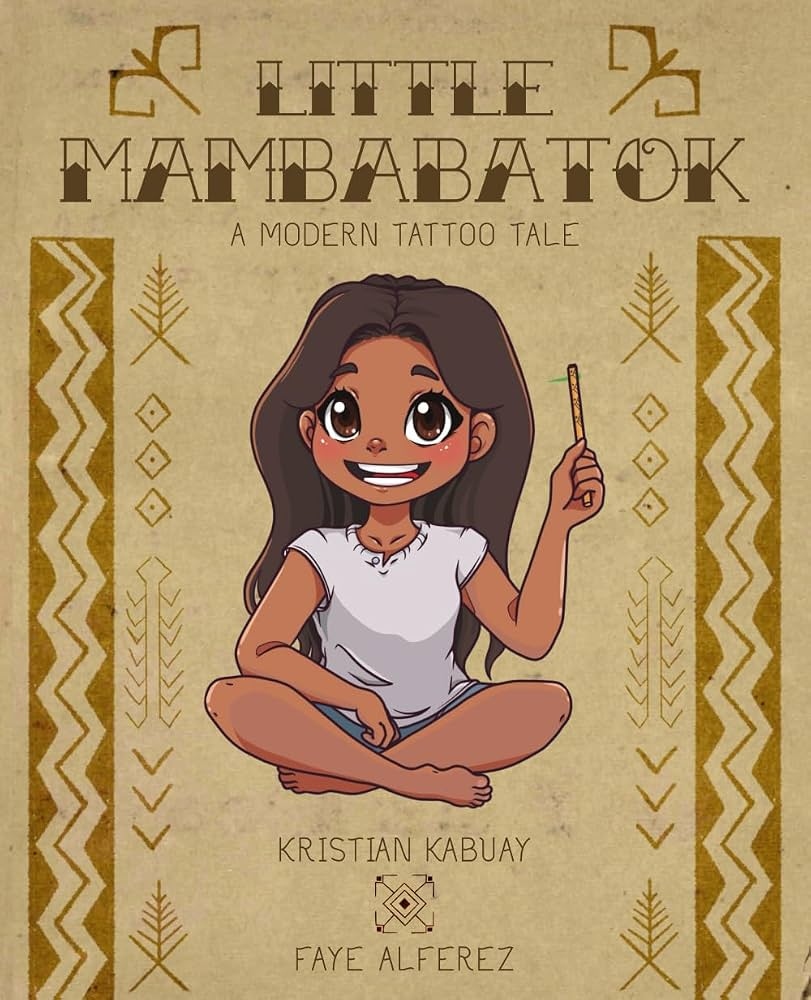
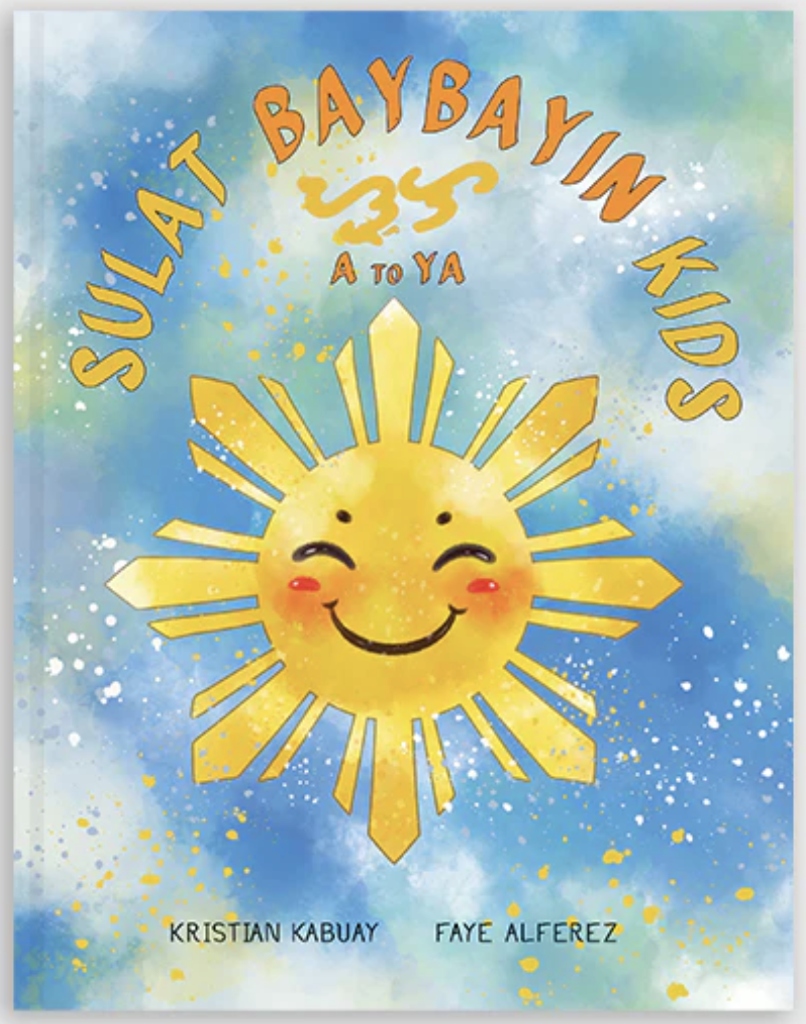
Two prior graphic novel titles with tattooing as central element
Founder, Baybayin.com — Filipino cultural education
Founder, Balay School — AI-powered Filipino cultural education

Benevolent Assimilation is not a story about tattooing. It is a story that could only be told by someone who practices it.

Where this story sits on the shelf.

Comparable titles demonstrating that the market exists — and the gap this story fills.

Monstress

Marjorie Liu · Image Comics · Multiple Eisner Awards

Demonstrates that the market will follow a culturally specific, formally ambitious graphic novel led by a woman of color when the creator's authority is visible on every page. This story occupies the same category — with a historical rather than fantasy framework. The horror does not need to be invented. The orders are in the congressional record.

Paying the Land

Joe Sacco · Metropolitan Books · 2020

Demonstrated that literary comics can carry the weight of historical argument about colonial violence without losing the reader. The differentiation: Sacco's is journalism. This story is narrative fiction with characters, an emotional spine, and a story that ends.

They Called Us Enemy

George Takei · Top Shelf · New York Times Bestseller

Demonstrated the market will buy graphic narratives about American atrocities against people of color when the storytelling is personal, specific, and executed with craft. This story addresses a conflict even less known to American readers — entering less crowded territory.

Pride of Baghdad

Brian K. Vaughan · Vertigo · 2006

For the civilian survival narrative during military violence, the small cast, and the devastating ending that refuses resolution. This story is historically specific, culturally grounded, and made by a creator with irreplaceable authority over the material.

Every comparable title above was made by a creator who researched their subject. This story is made by a creator who practices it.

No other creator can make this specific story. That irreplaceability is the market position.

Publisher & media inquiries.

Development complete. Script in progress. Cover artist in brief. For publisher submissions, streaming development conversations, and press inquiries.